
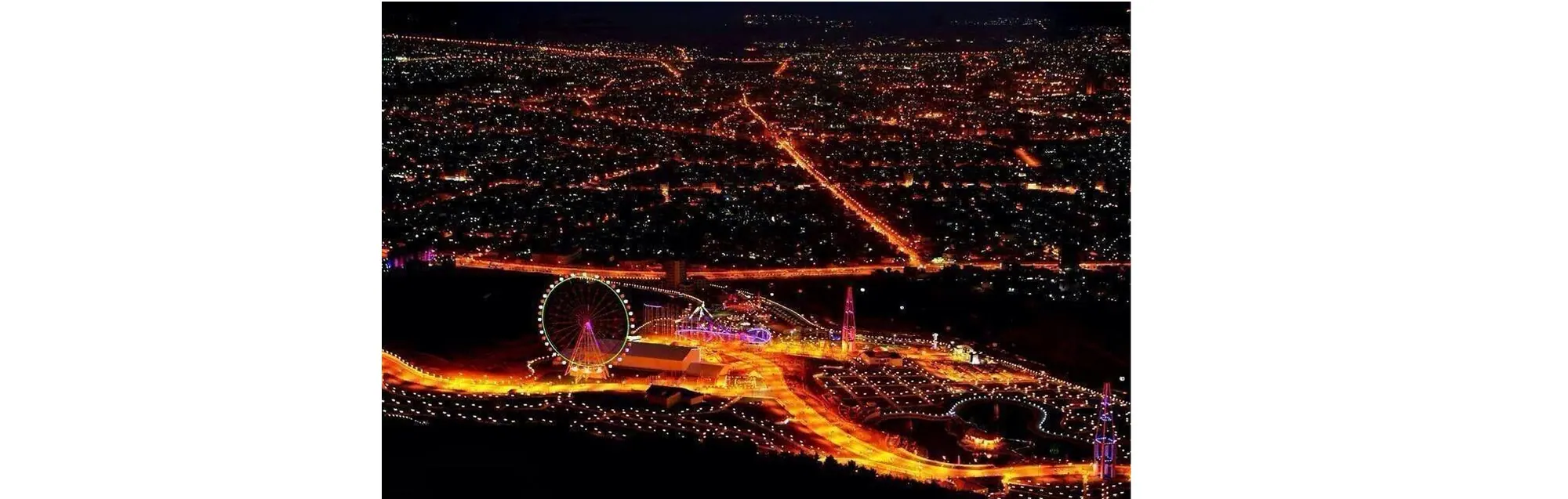
City · Sulaymaniyah Governorate
Sulaymani
Kurdistan's second city and cultural capital, founded in 1784, home to poets and politics, and to the Amna Suraka museum of the Ba'ath regime's crimes.
1 / 3
- Founded
- 1784, by Ibrahim Pasha Baban
- Baban capital
- 1784 to 1850
- Kingdom of Kurdistan
- 1922 to 1924
- Hall of Mirrors
- 182,000 shards
A city between mountains
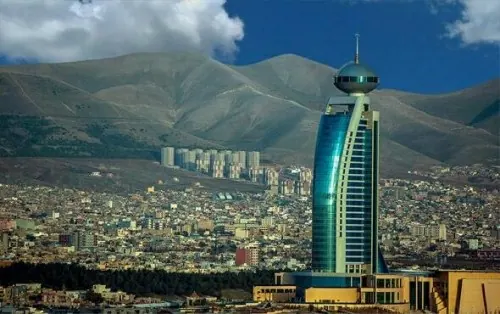
Sulaymani lies in the east of the Kurdistan Region, not far from the Iran-Iraq border. The Azmar, Goizha and Qaiwan mountains stand to the north-east, Baranan Mountain to the south and the Tasluja Hills to the west.
The climate is semi-arid, with very hot, dry summers and cold, wet winters. Average temperatures range from 0 to 39 C. Of Iraq's main cities, Sulaymani is known for its cooler summers and rainier winters, and snow falls every year or two.
Capital of poets and princes
The modern city was founded in 1784 by Prince Ibrahim Pasha Baban, who named it after his father Suleiman Pasha. Like Erbil, it is expanding fast, and since its foundation it has been a centre of culture, history and politics, though it has suffered through the region's many conflicts.
Sulaymani was the capital of the Baban principality from 1784 to 1850, and from 1922 to 1924 the capital of the Kingdom of Kurdistan, a short-lived unrecognised state declared after the collapse of the Ottoman Empire. It has always been a home of great poets, writers, historians, scholars and singers, among them Nali, Mahwi and Piramerd.
Amna Suraka, the Red Security
Amna Suraka means Red Security in Kurdish, after the red and brown bricks of the main building. It was the northern headquarters of the Ba'ath regime's intelligence service, the Mukhabarat, and thousands of people, mostly Kurds, were imprisoned, tortured and killed here. The Peshmerga stormed and liberated the complex in 1991, and in 2003 it became a museum, the first in Iraq.
Inside, the Hall of Mirrors holds 182,000 shards of mirror, one for each person killed in the Anfal campaign. The courtyard keeps the regime's tanks and guns as they were, and the main building preserves the cells and a photo exhibition lit in red. Entry is free; it is generally open every day except Friday, usually 9 am to noon and 2 to 4 pm. The walk from the bazaar along Salim Street takes about ten minutes.
- Visit on our 10-day Kurdistan tour, together with the bazaar, the Halabja monument and the Azmer hill viewpoint
- Allow at least two days in the city so you do not miss the opening hours
Trips that go here
Trips that visit Sulaymani
More destinations